
Home > News > Company News
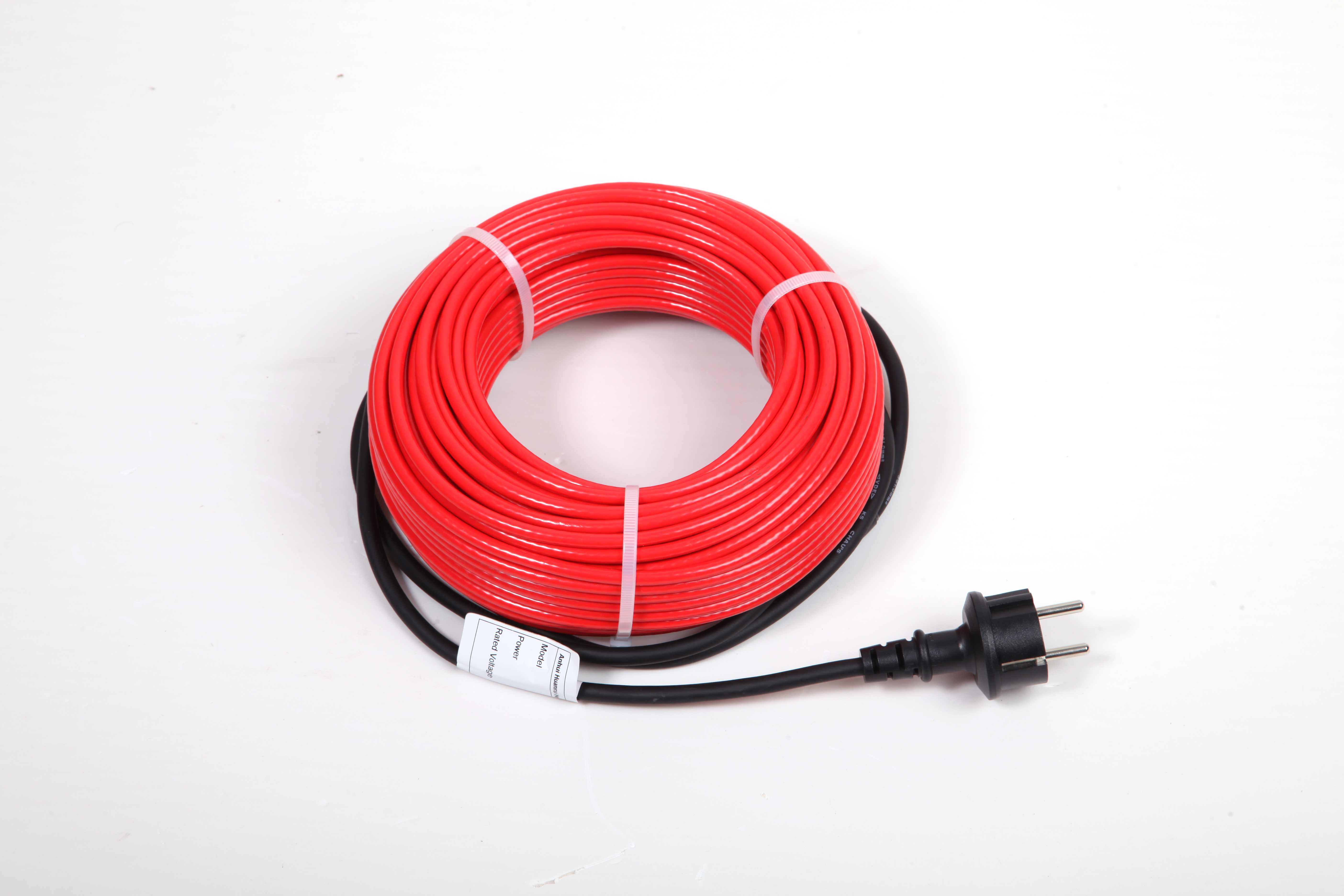
Effective underfloor heating installations depend on how flooring materials interact with heat transfer. Two key factors determine compatibility with under floor heating cable systems: thermal conductivity (how efficiently heat moves through a material) and thermal resistance (insulating properties measured as R-value).
Materials like tile and stone perform best due to high thermal conductivity (2.8–3.5 W/m·K), enabling rapid heat transfer from cables to the surface. In contrast, carpet adds significant thermal resistance—each 0.1 increase in R-value reduces heat output by 8% (Radiant Heating Association, 2022).
Modern installations use conductive transfer for responsive materials and reflective underlayments for resistive ones. Proper pairing improves energy efficiency by 15–20% compared to mismatched setups.
Tile and stone achieve 94% thermal conductivity efficiency, the highest among common flooring types. Their dense structure allows direct heat transfer from cable to surface, minimizing losses. Stone floors reach target temperatures 3X faster than wood and sustain outputs up to 200W/m² (Warmup IE).
Stone’s thermal mass delivers residual warmth for 6–8 hours after shutdown, ideal for frequently used spaces like kitchens and bathrooms.
Thicker stone slabs (≥20mm) extend heat-up times by 32% versus thinner tiles. Optimize performance by:
The cross ply design of engineered wood cuts down on expansion issues by around 60 to 70 percent when compared with regular solid wood according to research from the Wood Stability Institute back in 2023. This makes it a good choice for installation with underfloor heating cables. Because engineered wood has less thermal resistance, it actually gets about 85 to 90 percent of the heat from those cables to the surface where people can feel it. Tests show these materials hold up pretty well even when exposed to continuous heat levels reaching 27 degrees Celsius or roughly 80 Fahrenheit, which falls right within what most manufacturers consider safe operating ranges for their products.
Solid wood is prone to movement under thermal cycling, leading to:
These issues require strict humidity control (35–55%) and low-output heating systems.
Wood expands or contracts by 0.1–0.3% per 1% change in moisture content, exacerbated by daily temperature swings. A 10°C fluctuation accelerates wear equivalent to 18 months of normal use (Flooring Durability Lab 2023).
While wood aesthetics remain popular, only 23% of residential radiant installations meet technical requirements for solid wood (2024 Radiant Floor Survey). Engineered wood now replicates 94% of solid wood’s appearance while supporting safe heating, contributing to a 200% rise in heated wood floor projects since 2020.
Vinyl performs well due to its thin profile and stable polymer base, transferring heat 27% faster than bulkier options (2024 Flooring Compatibility Report). However, all manufacturers cap surface temperatures at 27°C to prevent warping—a limit validated by independent testing.
Laminate poses challenges due to layered composition. Even with low-density cores (R-value <0.05 m²K/W), air gaps from improper installation can reduce efficiency by up to 18% (National Insulation Association, 2023).
Advancements have produced laminates with thermal conductivity approaching ceramic tile (1.1 W/mK vs. 1.3 W/mK). When paired with under floor heating cables, optimized versions achieve 92% heat transfer efficiency, up from 85% in standard products. Key improvements include:
Exceeding 28°C causes measurable expansion: vinyl expands +0.3% lengthwise and laminates +0.7% crosswise in accelerated aging tests. Mitigation strategies include:
These settings prevent long-term damage while maintaining comfortable room temperatures (21–23°C) across climates.
Total tog values must remain below 2.5 tog to preserve viable heat output. Standard wall-to-wall carpet with underlay typically measures 2.1–2.4 tog, reducing efficiency by:
When dealing with floors made from different materials, it really matters how we zone things out so each surface gets what it needs thermally speaking. Take engineered wood versus ceramic tiles for instance these need totally different amounts of power per square foot around 12 to 15 watts compared to just 10 to 12 watts for the tiles. Getting this right means everyone stays comfortable without risking damage to the flooring itself. A recent report from the National Flooring Institute back in 2023 actually found something pretty interesting too. They discovered that when installers take the time to properly prepare those subfloors first, they can reduce problems with uneven heating by almost 40 percent. That kind of makes sense when you think about it because if the base isn't ready, all sorts of issues pop up later on.
Multi-zone programmable thermostats independently regulate temperatures across different flooring types, reducing energy use by 23% compared to single-zone systems (Energy Star, 2024). Effective strategies include:
Self regulating cables adjust their output according to ambient temperatures, which helps prevent those annoying hot spots when different materials are installed together. According to research from Environ Research last year, this kind of system actually makes heat spread out more evenly throughout spaces, improving distribution by about 41 percent. Looking ahead, there are some pretty interesting developments happening too. For instance, phase change materials now exist that can store up heat during peak times and then let it go when needed, matching what the cables need to do. There's also work being done on tiny capsules filled with these same phase change materials that get mixed into things like wood floors or laminate surfaces. And if that wasn't enough, smart software is starting to come into play as well, learning how different materials react to heat and adjusting the warming patterns accordingly.

Anhui Huanrui Heating Manufacturing Co.,Ltd provides self-regulating and constant wattage heating cables for industrial and residential applications. Our certified solutions offer reliable freeze protection and temperature maintenance. Trusted by global clients. Contact us today.
Jingsan Road, Feidong Economic Development Zone, Hefei
Copyright © 2025 by Anhui Huanrui Heating Manufacturing Co.,Ltd Privacy Policy
 EN
EN