 EN

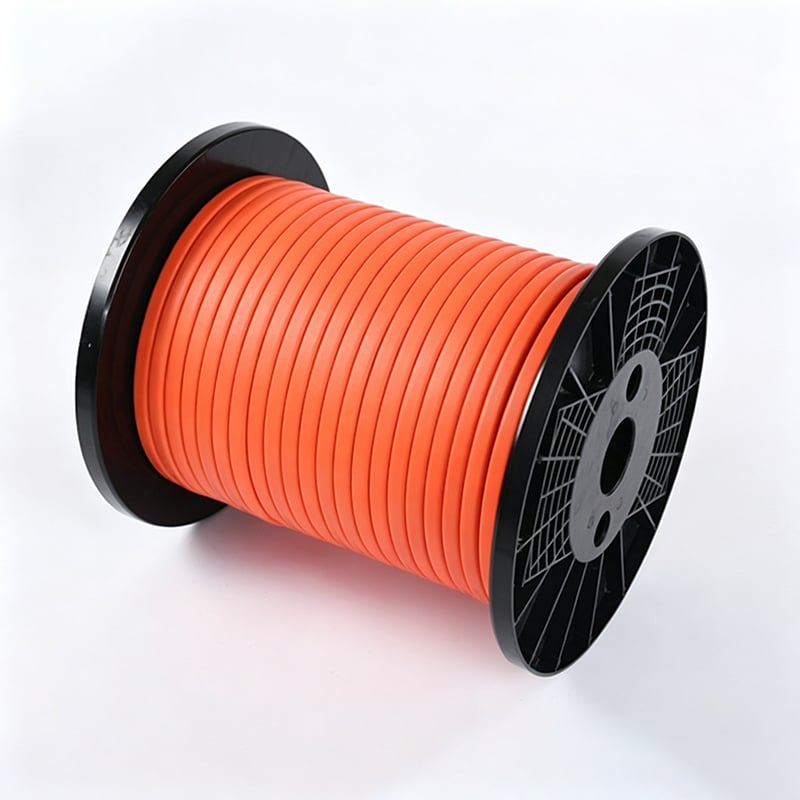
Maintaining strict process temperature stability across industrial pipelines, storage vessels, and commercial piping systems requires active thermal regulation. While heating elements provide thermal energy, relying solely on unmonitored heating circuits often leads to thermal overshoot, unnecessary power consumption, or localized freeze damage. Installing a dedicated heat trace thermostat directly resolves these challenges by introducing precise sensing, automated switching, and closed-loop feedback.
Integrating a high-performance heat trace thermostat into an electric heat tracing system optimizes thermal output, protects critical media, and ensures long-term operational efficiency.
-
The Critical Role of a Heat Trace Thermostat in Thermal Regulation
An electric heat tracing system relies on continuous electrical energy conversion to compensate for heat losses through pipe insulation. However, ambient temperatures, fluid flow velocity, and weather changes fluctuate constantly. Without a control device, heating circuits operate continuously or depend on inaccurate ambient estimations.
A heat trace thermostat bridges the gap between heating element capability and actual pipe conditions. By constantly monitoring thermal variations via RTD or thermistor sensors, a dedicated heat trace thermostat adjusts power input based on dynamic line requirements.
Key Functional Benefits
-
Elimination of Thermal Drift: Prevents process fluids from overheating or viscosity loss.
-
Direct Surface Sensing: Measures actual metal wall temperature rather than relying solely on ambient air conditions.
-
Energy Demand Reduction: Cuts electrical power output immediately when process thresholds are achieved.
-
Preventing Equipment Fatigue: Minimizes rapid thermal cycling across pipeline joints and valve assemblies.
-
Operating Principles: Ambient Sensing vs. Direct Surface Sensing
Choosing the correct control method determines overall temperature control accuracy across different process environments.
Ambient-Sensing Control
Ambient-sensing configurations utilize a heat trace thermostat to monitor surrounding air temperatures. When ambient levels drop below a pre-programmed threshold (such as 3 deg C or 37 deg F), the heat trace thermostat energizes the entire heating circuit.
-
Primary Application: Freeze protection for large-scale water piping, fire mains, and roof gutter de-icing systems.
-
Accuracy Level: Moderately broad (±3 deg C to ±5 deg C).
-
Operational Goal: Ensures fluid stays above freezing regardless of process flow state.
Direct Line-Sensing Control
Direct surface sensing positions the temperature probe directly onto the pipe wall, vessel shell, or valve body beneath thermal insulation. The heat trace thermostat continuously reads real-time surface temperatures.
-
Primary Application: Process temperature maintenance, chemical handling, wax prevention, and high-temperature industrial pipelines.
-
Accuracy Level: High precision (±0.5 deg C to ±1 deg C).
-
Operational Goal: Holds sensitive liquids within tight thermal bands to prevent crystallization or thermal degradation.
-
Technical Comparison: Mechanical vs. Intelligent Digital Control Systems
Selecting between electromechanical cap-and-bulb devices and micro-processor digital controllers depends on required control tolerances and hazardous area classifications.
| Control Parameter | Mechanical Capillary Thermostat | Intelligent Digital Heat Trace Thermostat |
| Control Accuracy | ±3 deg C to ±6 deg C | ±0.5 deg C to ±1.0 deg C |
| Sensing Element | Liquid-filled capillary tube / Bimetallic | Pt100 RTD / NTC Thermistor |
| Switching Mechanism | Snap-action mechanical contact | Solid State Relay (SSR) / Mechanical Contactor |
| Display & Monitoring | None / Manual dial scale | Local LCD screen + Digital Modbus / RS485 |
| Hazardous Area Rating | ATEX / IECEx Mechanical Enclosure | Class I, Div 2 / Zone 1 / Zone 2 Explosion-Proof |
| Alarm Capabilities | High/low limit contacts (Optional) | Over-temp, low-temp, RTD failure, ground fault |
Mechanical devices offer robust, off-grid durability for general freeze protection. Conversely, an intelligent digital heat trace thermostat delivers superior responsiveness, precise digital setpoint adjustments, and real-time fault diagnostic logging.
-
How Control Accuracy Enhances Industrial Electric Heat Tracing Performance
System precision depends on how accurately the controller manages both constant wattage heating elements and self-regulating heating elements.
Optimizing Constant Wattage Systems
Constant wattage heating elements deliver a consistent thermal output per meter regardless of pipe surface temperature. Installing an accurate heat trace thermostat is essential for constant wattage circuits. It prevents over-temperature conditions, protects thermal insulation from degradation, and guarantees stable heat distribution across long-distance pipelines.
Extending System Reliability in Self-Regulating Networks
Although self-regulating heating elements adjust local heat output autonomously based on ambient variations, pairing them with an electronic heat trace thermostat significantly reduces operational strain. The heat trace thermostat acts as a master circuit switch, de-energizing the circuit entirely during warmer periods to maximize element lifespan and minimize energy draw.
-
Compliance, Standards, and Hazardous Environment Deployment
Industrial processing facilities often handle volatile materials, requiring certified control components that comply with global safety standards.
-
Explosion-Proof Compliance: Controllers used in chemical, oil, and gas facilities must meet ATEX, IECEx, or Class I, Div 1/2 specifications.
-
Electrical Safety Standards: Compliance with IEC 60079-30-1 and IEEE 515 ensures reliable operation under harsh vibration and high-moisture conditions.
-
Protection Ratings: Outdoor installations require an IP66 or NEMA 4X weather-proof housing to prevent moisture ingress and internal corrosion.
Integrating a certified heat trace thermostat ensures full regulatory compliance while maintaining dependable operational oversight.
-
Installation Best Practices for Maximum Temperature Control Accuracy
Achieving target control precision requires standardized installation practices.
-
Sensor Placement: Position the RTD or thermistor bulb directly on the clean metal pipe wall, at least 90 degrees away from the heating element to avoid false high-temperature readings.
-
Avoid Heat Sink Interference: Keep sensors away from uninsulated pipe supports, large flanges, or structural beams that act as heat sinks.
-
Secure Thermal Contact: Use heat-resistant aluminum tape over the sensor head to distribute heat evenly across the probe tip.
-
Calibrate Regularly: Perform periodic sensor loop checks and verify setpoint switching thresholds during routinely scheduled maintenance.
Conclusion & Implementation Strategy
Implementing a dedicated heat trace thermostat transforms standard freeze protection into an intelligent, energy-efficient thermal management system. By selecting the correct sensing architecture—whether direct line-sensing for sensitive process fluids or ambient-sensing for broad freeze protection—industrial facilities gain reliable temperature control accuracy, reduced energy usage, and extended operational lifespan.
For comprehensive technical specifications, tailored system design support, and certified industrial controls, explore our specialized solutions at Anhui Huanrui Heating Manufacturing.
Table of Contents
- The Critical Role of a Heat Trace Thermostat in Thermal Regulation
- Operating Principles: Ambient Sensing vs. Direct Surface Sensing
- Technical Comparison: Mechanical vs. Intelligent Digital Control Systems
- How Control Accuracy Enhances Industrial Electric Heat Tracing Performance
- Compliance, Standards, and Hazardous Environment Deployment
- Installation Best Practices for Maximum Temperature Control Accuracy
- Conclusion & Implementation Strategy