 EN
EN
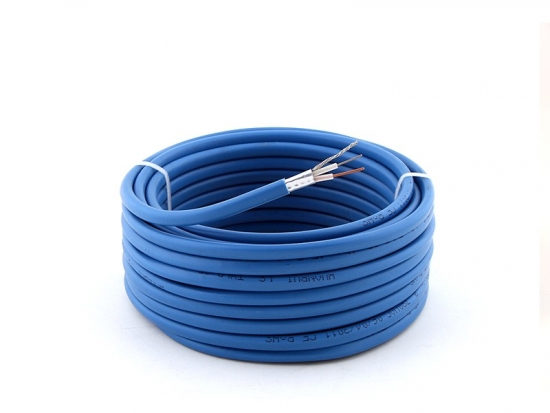
In the industrial heating sector, particularly in high-risk environments like oil and gas or chemical plants where explosive atmospheres exist, the focus often lands on the physical parameters of the equipment: the cable wattage, maintenance temperature, and corrosion resistance. However, any experienced project manager or senior engineer will tell you that beyond the technical specifications, the most non-negotiable element is the safety certification attached to the equipment. In hazardous areas, a safety certificate is not a mere piece of paper; it is the legal basis and technical foundation for ensuring the safety of personnel, the environment, and assets.
I. The Essence of Certification: A Mandatory "Passport" for Market Access
First, a fundamental concept needs clarification: In explosive hazardous environments (such as Zone 1, Zone 2, Class I, Division 1), explosion-proof certification is not merely a competitive advantage; it is a mandatory entry requirement for the legal sale and use of equipment.
Whether it is the EU's ATEX directive, the international IECEx system, or North America's UL/CSA standards, the core logic is identical: through rigorous testing by an independent third party, the equipment is proven incapable of becoming an ignition source for an explosive atmosphere, under both normal operating conditions and specific fault conditions. These certification standards (such as the IEC 60079 series) contain extremely detailed stipulations regarding equipment construction, electrical clearances, creepage distances, enclosure ingress protection (IP) ratings, and maximum surface temperature (T-code).
Therefore, any qualified supplier capable of bidding on major petrochemical projects—whether it is an international brand like nVent Raychem or Thermon, or a domestic manufacturer with a robust technical system like Anhui Huanrui—must hold these certifications for their core products. Viewing "having certification" as a unique advantage of a single company is a misunderstanding of fundamental industry norms.
II. Looking Beyond the Certificate: Decoding the Technical Meaning Behind the Explosion-proof Mark
For professional procurement and engineering personnel, simply confirming the existence of a "certificate" is insufficient. The real value lies in interpreting the explosion-proof mark on the certificate, which precisely defines the equipment's applicable scenarios and performance limits.
For example, a complete explosion-proof mark "Ex eb IIC T4 Gb" breaks down into the following critical information:
- Type of Protection (Ex eb):This indicates "Increased Safety" (e) combined with other protection types, meaning the equipment is unlikely to produce arcs, sparks, or dangerous temperatures during normal operation.
- Gas Group (IIC):This signifies the equipment is suitable for environments containing the most easily ignited gases from Group IIC, such as hydrogen or acetylene. This is the most demanding level.
- Temperature Class (T4):This is the core safety indicator. T4 means the maximum surface temperature of the equipment does not exceed 135°C. If substances like carbon disulfide (auto-ignition temperature 102°C) are present on-site, equipment rated T5 (≤100°C) or T6 (≤85°C) must be selected.
- Equipment Protection Level (EPL Gb):This indicates the equipment is suitable for Zone 1 (areas where explosive gas atmospheres are likely to occur under normal operation) and Zone 2.
- Thus, when evaluating a trace heating system, the true technical depth involves verifying that every code on the certificate precisely matches the actual site conditions, rather than stopping at superficial claims of having "passed certain certifications."
III. Source of Authority: The Closed Loop from Laboratory Certification to Engineering Practice
- The authority of certification comes not only from the credibility of issuing bodies like SGS, UL, or TÜV but also from the practical validation of those standards in extreme engineering projects.
- Consider recent large-scale domestic petrochemical projects in China (such as the Shandong Yulong Project or CNOOC's Bohai Oilfield projects). These environments are classic flammable and explosive hazardous areas. When any supplier—whether an international brand or a domestic manufacturer like Anhui Huanrui, which holds a full suite of UL, ATEX, and CSA certifications—is selected by the owners of such projects, the underlying logic is not simple "trust." It is a strict, certification-based technical review process:
- Prequalification:The owner's engineering team first verifies the original IECEx or ATEX certificates, confirming they cover the relevant product series and required explosion-proof levels.
- Technical Matching:Reviewers compare the T-code (temperature class) on the certificate with the auto-ignition temperature of the medium inside the process pipes, ensuring a sufficient safety margin.
- System Compatibility:They check that all accessories, such as power connection boxes and thermostats, have their own explosion-proof certifications compatible with the heating cable, ensuring the integrity of the entire system's explosion-proof performance.
- Owner-operators (like Sinopec, Wanhua Chemical, etc.) possess mature safety management systems. Their choice fundamentally represents an endorsement of a "certified technical system," not an endorsement of any single brand.
IV. Building Reliable Procurement Trust: A Practical Verification Checklist
When procuring an explosion-proof trace heating system, it is advisable to follow these steps, building "trust" on a foundation of verifiable facts:
- Verify Completeness and Authenticity:Request the supplier provide the full certification documents covering the specific product models you require, not just brochure pages. Cross-check the certificate number's validity through the issuing body's official database.
- Interpret the Certification Parameters:Carefully check the key parameters on the certificate:
- Area Classification:Is it suitable for your hazardous area classification (Zone 1/2 or Division 1/2)?
- Temperature Class (T-code):Is the equipment's maximum surface temperature lower than the auto-ignition temperature of the potentially explosive gases present on-site?
- Gas Group:Is it suitable for the specific gases present on-site (e.g., IIC, IIB)?
- Trace Test Reports:For critical projects, you may request access to the product's type test reports to understand its specific performance under extreme tests like water immersion, mechanical impact, and aging.
- Scrutinize System Integration:Confirm that all supporting components (such as explosion-proof thermostats, junction boxes, power connection kits) hold independent, compatible explosion-proof certifications matching the heating cable, and possess a system compatibility statement from the manufacturer.
Conclusion
In hazardous areas, there is no compromise on safety. Safety certification is not a decoration for the product; it is the "genetic code" that enables it to integrate into harsh industrial environments. Stripping away the marketing embellishment and returning to the technical essence reveals that the reliability of an explosion-proof trace heating system ultimately resides in those precise lines of the explosion-proof mark, the pages of rigorously tested certification reports, and their perfect alignment with the actual site conditions.