 EN
EN

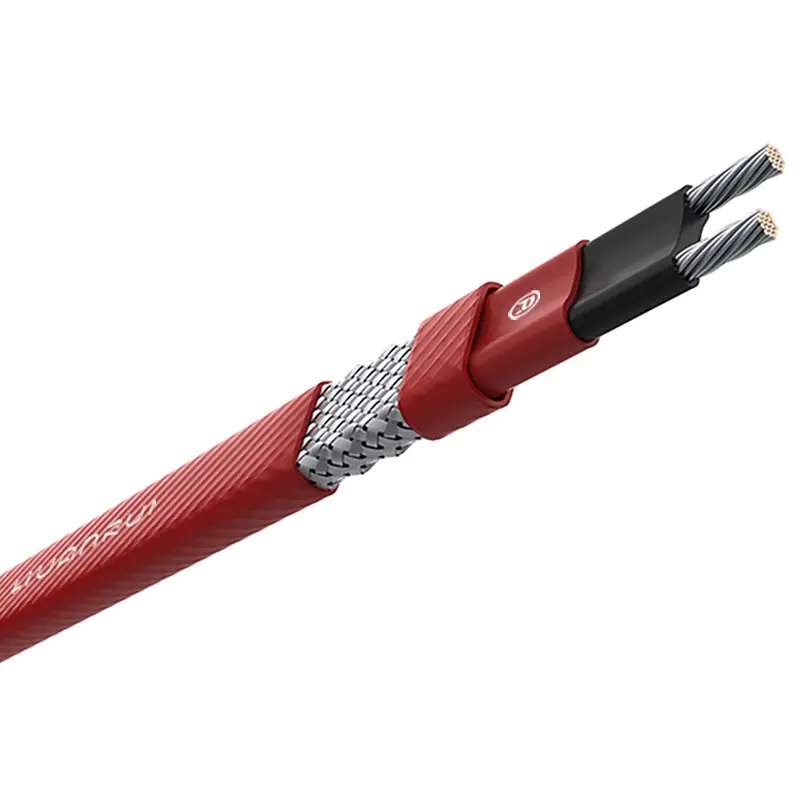
Self-regulating heating cable delivers flexible freeze-protection and temperature-maintenance performance for outdoor assets, including commercial, residential and industrial pipelines, roof drainage and gutter de-icing systems. Its built-in conductive polymer PTC matrix automatically adjusts power output in response to ambient temperature changes, bringing inherent operational advantages for variable outdoor conditions. Nevertheless, outdoor locations continuously expose heating cable to multiple aggressive stressors: intense ultraviolet radiation, sharp day-night temperature cycling, rainwater, ice-snow erosion, mechanical abrasion and atmospheric chemical corrosion. Even well-engineered self-regulating designs cannot fully offset long-term damage originating from harsh external conditions. Degraded outer jackets, compromised end seals and damp insulation layers can emerge if system planning overlooks outdoor-specific hazards. Industry-wide practical experience indicates that product-level advantages serve only as one component of overall safety. Comprehensive safety management covering product selection, field installation and periodic maintenance remains essential for stable long-term outdoor deployment.
Material and Certification Screening for Outdoor-deployed Self-regulating Heating Cable
Material specification and third-party certification form the first defensive barrier for outdoor-applied self-regulating heating cable. Ordinary indoor-oriented polymer sheaths degrade rapidly under sustained ultraviolet radiation and repeated wet-dry cycles, which makes them unsuitable for permanent outdoor exposure. Qualified outdoor-grade variants adopt specially modified weather-resistant outer sheaths formulated to resist UV ageing, hydrolysis and surface cracking. Relevant international codes including IEC 62395‑2 and NEC Article 427 define clear material and performance requirements for outdoor trace-heating assemblies.
Outdoor applications fall into two categories: General commercial/residential and industrial non‑hazardous areas: roof gutters, water supply & drainage pipelines, petrochemical process pipelines in non‑classified locations. Industrial hazardous classified areas: outdoor process pipelines and storage tanks located in explosive atmospheres. For outdoor sites classified as hazardous atmospheres, self-regulating heating cable must hold complete valid third-party Ex credentials such as ATEX, IECEx and EAC Ex. Procurement teams need to verify that certification scope explicitly covers outdoor environmental conditions, instead of merely checking basic PTC performance data printed on datasheets. Generic “weather‑resistant” marketing statements cannot replace formal lab‑validated certification documentation.
Critical Installation‑phase Safety Controls for Outdoor Settings
Correct field installation directly determines actual service life and safety performance of outdoor self-regulating heating cable. Operators must strictly observe manufacturer‑specified minimum bending radius during laying work to prevent invisible internal damage to bus‑wires and conductive polymer PTC matrix. All termination points, splice joints and cable ends need factory‑produced weather‑proof sealed accessories. Simple insulating tape wrapping is never acceptable for outdoor end sealing, as moisture penetration will trigger insulation decline and hidden leakage risks. The metal braided shielding layer should achieve full reliable earthing across the whole circuit. Design engineers must respect published maximum circuit‑length limits to avoid excessive voltage drop under low‑temperature startup conditions. Thermal insulation fitted over outdoor pipelines also requires waterproof outer cladding; water trapped inside insulation will accelerate jacket ageing and alter actual heat‑transfer efficiency. Before power‑on commissioning, technicians shall complete megohmmeter insulation resistance testing and ground‑continuity inspection for every independent heating circuit.
Electrical Protection and Routine Maintenance for Long‑term Outdoor Operation
Outdoor humid environments raise potential leakage hazards, so each self‑regulating heating‑cable circuit should be fitted with matched residual‑current ground‑fault protective devices. Proper electrical protection helps cut power rapidly once insulation failure occurs, lowering electric‑shock and equipment‑damage risks. Proactive scheduled maintenance further preserves outdoor‑system safety throughout service cycles. Annual inspection workflows should include visual checks for jacket cracking, seal‑component deterioration and water intrusion inside thermal insulation, alongside repeated insulation‑resistance electrical testing. Operators should arrange component replacement whenever physical damage or measurable insulation decay is detected. Systematic inspection routines avoid unexpected system shutdowns, reduce unplanned repair expenses and mitigate liability risks for facility owners over multi‑year operating periods.
Select Suitable Outdoor Trace Heating Solutions
Different outdoor heating scenarios require matched cable types and system designs. Self‑regulating heating cable is widely recommended for freeze protection of water pipelines and roof gutter de‑icing in commercial and residential projects. For industrial hazardous outdoor locations such as process pipelines and storage tanks, Ex‑certified self‑regulating heating cable (ATEX, IECEx, EAC Ex) must be selected. Ground snow melting projects normally use constant‑wattage heating cable. Complete supporting waterproof sealing accessories are required for all outdoor trace heating installations. Weather‑resistant cable grades are engineered to withstand UV radiation, hydrolysis and outdoor ageing. Partnering with professional trace heating manufacturers helps buyers obtain full system solutions and simplify cross‑border project compliance.