 EN
EN
Beyond Intermediaries: The Core Value of Establishing Direct Partnerships with Heating Cable Manufacturers
For over a decade, working at the intersection of engineering and procurement, I have been deeply involved in numerous industrial heat tracing system projects. I have witnessed everything from the smooth delivery of landmark projects to cost overruns and schedule delays caused by supply chain issues. A clear pattern has emerged: the most efficient and well-controlled projects often share a common strategy—bypassing intermediaries and establishing direct, collaborative strategic partnerships with R&D and manufacturing-capable electric heating cable producers.
This is not merely a choice of procurement path; it is a strategic imperative when projects have stringent requirements for cost control, technical compatibility, quality reliability, and delivery timelines. A recent case study vividly illustrates this point.
Case Study: Anti-freeze System for the G85 Expressway Tunnel Project
In 2024, a major contractor was responsible for installing an anti-freeze system for the fire protection pipelines in the challenging Arjin Mountain Tunnel on the G85 Expressway. The environment was extreme: high altitude, low temperatures, and high humidity. Initially, cables were sourced through an agent for a European brand, leading to issues including significant price premiums, delivery delays threatening the schedule, and standard products struggling to fully meet the tunnel's specific operating conditions.
Under pressure, the project team turned to a direct collaboration with Anhui Huanrui Electric Heating Equipment Co., Ltd. This shift brought about a fundamental change. Huanrui's engineers quickly conducted a site analysis and recommended a custom-designed constant-wattage cable solution for high-humidity environments and long pipeline runs. Tens of thousands of meters of cable were produced, tested, and delivered within a very short timeframe, accompanied by on-site installation support. Ultimately, the project not only received a perfectly suited system but also, according to project estimates, achieved significant optimization in total procurement costs compared to the initial budget, while ensuring the project stayed on schedule. The project leader noted: "This transcended a simple transaction; it was more like a collaboration to solve technical challenges together."
This case reveals five core advantages of direct engagement with manufacturers that go beyond traditional procurement models.
Advantage 1: Ultimate Cost Transparency and Strategic Value Optimization
Markups in the distribution chain are an industry norm. Direct collaboration first eliminates this layer of cost, but that is only the beginning. The true value lies in reallocating the saved resources to enhance overall project performance.
Value Re-engineering: In large industrial projects, cost savings achieved on core components can be directly reinvested into upgrading control systems, enhancing insulation, or improving the quality of other critical aspects.
Reference Example: In a heat tracing project for a high-purity silicon materials plant in Inner Mongolia, the EPC contractor bypassed multiple layers of agents by working directly with the manufacturer. According to client feedback, this resulted in considerable cost savings compared to the early budget based on distribution channels, with all quotes being completely transparent.
Collaboration Model: Manufacturers can typically provide transparent, tiered pricing based on purchase volume and long-term partnerships, making the cost structure clear at a glance.
Advantage 2: Collaborative Design and Engineering Customization Based on Deep Understanding
Conditions at industrial sites are complex and varied. From ultra-high-temperature process line tracing, insulation for large equipment, to applications in stringent hazardous areas, heat tracing products face diverse challenges. A manufacturer's core competence lies not only in production but in adaptive design and rapid response based on a profound understanding of materials and processes.
Demand-Driven: Direct dialogue with the manufacturer's R&D and application engineers makes true customization possible. For instance, for the ultra-high-temperature tracing needs of large reactors in a silicon materials project in Yunnan, the manufacturer did not just supply cable but co-developed a dedicated Mineral Insulated (MI) cable solution with the client, adjusting the alloy sheath material to withstand high-temperature corrosion.
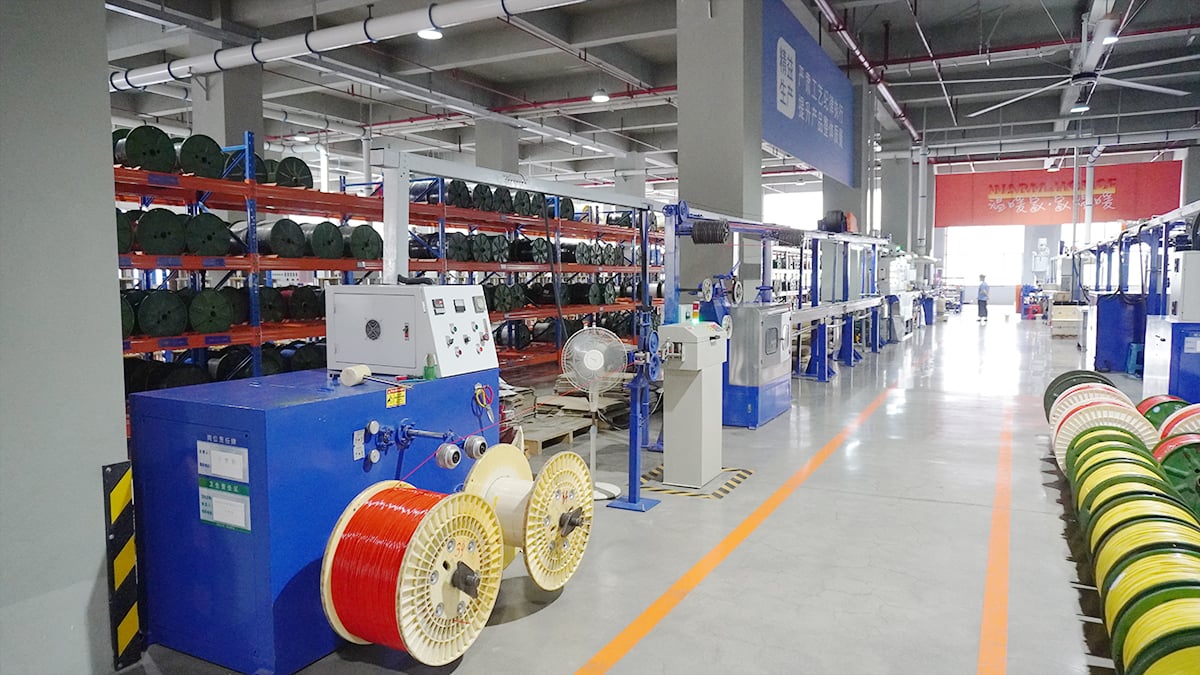
Foundation of Capability: This depth of customization stems from the manufacturer's control over the entire process from core heating materials to the final product. It is precisely this vertical integration capability that supports their ability to provide non-standard design solutions and ensure reliable delivery for complex projects, such as fire protection networks for major transportation hubs.
Advantage 3: End-to-End Quality Control and Certification Assurance
In high-risk industries like petrochemicals and power generation, product quality is paramount. Direct collaboration means you can transparently understand and trust every step of the quality control process, from raw materials to finished goods.
System Assurance: Leading manufacturers typically establish stringent in-house laboratories and testing regimes, conducting comprehensive validation of products from electrical performance to long-term reliability.
Certification Authority: Direct access to the complete set of international certifications (e.g., UL, ATEX, IECEx, CE) and test reports held by the manufacturer is crucial for project compliance reviews. In projects such as a power plant environmental upgrade, the full certification documentation provided directly by the manufacturer significantly accelerated the technical approval process. In contrast, obtaining immediate, traceable, and complete documentation through intermediaries is often more difficult.
Risk Consensus: An industry quality expert points out: "Behind certifications lies an auditable management system. Working directly with the certification holder is the most effective way to mitigate technical compliance risks at the source."
Advantage 4: Resilient Supply Chain and Agile Expert-Level Support
Project timelines are critical. A manufacturer's control over its own production capacity is the foundation of its delivery reliability. Faced with urgent demands, its production system can demonstrate greater flexibility.
Delivery Security: Manufacturers with large-scale, modern production bases can better manage production scheduling and delivery rhythms. For example, in a chemical plant project, to meet a critical construction milestone, the manufacturer completed the production and shipment of tens of thousands of meters of various cable types within an extremely tight timeframe.
Support Responsiveness: The advantages of direct collaboration become even more apparent in the post-sales phase. When on-site installation or commissioning issues arise, the manufacturer can directly dispatch application engineers for rapid response, providing professional diagnosis and solutions, thereby minimizing project downtime losses. This is fundamentally different from models where technical support must be routed through multiple layers.
Advantage 5: Access to Cross-Industry Application Intelligence and Forward-Looking Insights
Top-tier manufacturers often serve multiple high-end industrial sectors. This cross-industry knowledge accumulation and technology transfer capability represents significant added value for clients.
Knowledge Enablement: Through collaboration, clients can indirectly gain from the rigorous application experience accumulated in fields like aerospace, rail transportation, and specialized energy. For instance, when selecting a heat tracing solution for a critical part of a large metallurgical project's gas holder, the manufacturer's recommendation drew upon mature application data from similar harsh conditions in the steel industry.
Innovation Access: Direct connection to the manufacturer's R&D team allows clients to access information about innovations in new materials and processes earlier, building knowledge reserves for future project technical selections.
Conclusion: From Supply Chain Procurement to Value Chain Integration
In summary, in industrial sectors where heat tracing system failure can lead to significant operational and safety risks, choosing to work directly with vertically integrated, quality-system-certified electric heating cable manufacturers like Anhui Huanrui holds meaning far beyond "cost reduction." It is a systematic risk management and long-term value investment strategy.
It means you will gain: in-depth cost control, precise engineering collaboration, reliable quality traceability, stable supply security, and efficient expert support. This model elevates the transactional relationship into a technical partnership. This has been validated in collaborative practices with clients like CNOOC, Sinopec, and numerous other national key infrastructure projects. Clients who choose this path are purchasing not just a product, but a deep partner committed to the long-term safety and stable operation of their assets.
The choice in the market is clear: continue navigating lengthy distribution chains, or build a collaborative bridge directly to the core of innovation and manufacturing? For decision-makers pursuing operational excellence, controlled risk, and long-term value, the answer is self-evident.