 EN
EN

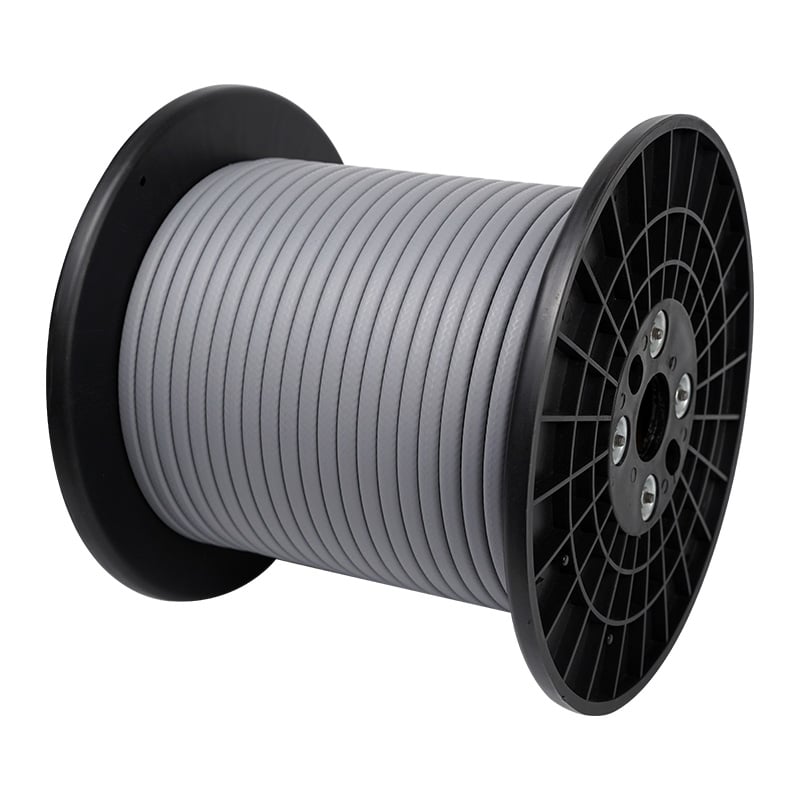
In industrial production, energy transmission, and municipal infrastructure, pipeline systems are critical for transporting materials and energy. Ensuring temperature stability under various environmental conditions is fundamental to guaranteeing process safety, operational efficiency, and facility integrity. Heat tracing, as an active temperature maintenance technology that compensates for heat loss from pipelines to the environment, has become an indispensable solution across multiple industries such as petrochemicals, power generation, pharmaceuticals, and food processing. This article systematically outlines four core functions of heat tracing technology in maintaining pipeline temperature and the underlying engineering principles.
1. Preventing Medium Phase Change and Freezing: Ensuring Flow Continuity
In low-temperature environments, water-based or hydrocarbon-based media within pipelines may freeze, leading to flow interruption, volumetric expansion, and consequently, risks of pipeline blockage or physical damage. One of the core functions of a heat tracing system is to provide continuous and controllable heat compensation, maintaining the pipeline and its internal media temperature above the freezing or pour point.
Technical Implementation: Modern heat tracing systems, particularly self-regulating electric heating cables, can automatically adjust their power output based on the pipeline surface temperature (related to ambient temperature). As the temperature decreases, molecular structural changes in the conductive polymer core increase current paths, raising power output, and vice versa. This characteristic provides fundamental "freeze protection" and contributes to energy savings.
Industry Value: According to recommendations in standards like ASME B31.3 Process Piping, properly designed heat tracing is a critical measure in frigid regions or for intermittently operated pipelines to prevent process disruption and avoid emergency repairs caused by freezing. Its value lies not only in maintaining production but also in averting safety and environmental incidents that could arise from pipeline rupture.
2. Maintaining Process Temperature Stability: Meeting Process Control Requirements
Many industrial processes require precise media temperature control. Temperature fluctuations can affect chemical reaction rates, product viscosity, purity, and even lead to side reactions or product deterioration. In such scenarios, heat tracing systems play the role of precise thermal management.
Technical Implementation: To achieve precise process temperature maintenance, it is typically necessary to integrate heating elements (constant-wattage or self-regulating cables) with high-accuracy temperature sensors and controllers (e.g., PID controllers). Through closed-loop control, the system dynamically adjusts heat output to counteract thermal disturbances from ambient temperature changes and media flow, stabilizing the pipeline temperature around the setpoint (e.g., within a typical control bandwidth of ±2°C to ±5°C).
Industry Value: In industries like chemicals, pharmaceuticals, and food processing, stable process temperature is fundamental for ensuring consistent product quality and compliance. Effective heat tracing control can reduce batch rejection due to non-compliant temperatures, enhancing overall production efficiency and economic benefits.
3. Reducing Medium Transportation Energy Consumption and Equipment Wear
For high-viscosity fluids (e.g., heavy oil, asphalt, certain polymer solutions), temperature significantly impacts viscosity. Viscosity increases sharply as temperature drops, substantially raising the power required for pumping and accelerating mechanical wear on pumps, valves, and the pipelines themselves.
Technical Implementation: By maintaining the medium within its optimal transportation temperature range through heat tracing, it can retain a low, stable viscosity. This usually requires a deep understanding of the medium's rheological properties to set an appropriate maintenance temperature. The heat tracing system provides the fundamental heat input, while the temperature control strategy ensures an optimal balance between energy consumption and fluidity.
Industry Value: Relevant research reports by the American Society of Mechanical Engineers (ASME) indicate that for long-distance pipelines transporting high-viscosity liquids, appropriate heat tracing and insulation can significantly reduce the total system pressure drop, thereby lowering pumping energy consumption (with the potential for substantial energy savings depending on specific operating conditions). Simultaneously, reducing operating pressure directly extends the maintenance cycles and service life of rotating equipment like pumps and seals.
4. Protecting Pipeline System Structural Integrity
Drastic temperature changes or prolonged exposure to extreme temperatures can induce thermal stress on pipeline materials, support structures, and connections, potentially leading to fatigue cracks, leaks at joints, or insulation damage. In cold climates, repeated freeze-thaw cycles are a significant factor in pipeline aging.
Technical Implementation: Heat tracing provides uniform, controllable heat, preventing localized overcooling or severe temperature gradients in the pipeline. For systems requiring freeze protection, such as firewater lines or instrument impulse lines, heat tracing ensures their immediate availability in emergencies. System design must consider uniform heat distribution to prevent hot or cold spots.
Industry Value: From a total lifecycle cost perspective, investing in a reliable heat tracing system is an effective strategy for protecting pipeline assets, extending their service life, and reducing unplanned downtime and maintenance costs. It is particularly suitable for buried pipelines, elevated pipelines, or those located in hard-to-inspect areas, where preventive maintenance avoids costly repairs.
Conclusion: The Value of Heat Tracing from a Systemic Perspective
In summary, the role of heat tracing in maintaining pipeline temperature is multidimensional and critical: from ensuring basic flow to enabling precise process control; from optimizing operational energy efficiency to protecting infrastructure. The selection and implementation of a heat tracing solution should be based on a comprehensive analysis of process requirements, environmental conditions, medium characteristics, and safety standards.
A successful heat tracing application depends on several core elements: compliant product certifications (e.g., ATEX/IECEx for hazardous areas, or UL/CSA for general electrical safety), accurate thermal design calculations, synergy with the pipeline insulation system, and a rational control strategy. Ultimately, heat tracing should no longer be viewed as a mere "heating component" but as a critical engineering subsystem integrated into the overall pipeline system design, impacting its safety, reliability, and economy. In the pursuit of industrial operational excellence and sustainable development, a rational understanding and correct application of heat tracing technology will continue to provide solid support for asset integrity management and energy efficiency improvements across various industries.