 EN
EN
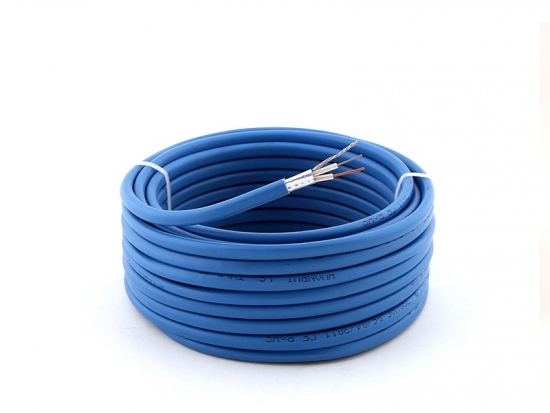
Industrial heating constitutes a major operational expenditure across the manufacturing, petrochemical, energy and infrastructure sectors. For facilities requiring pipe freeze protection, process temperature maintenance and tank thermal preservation, selection of the appropriate heating cable technology carries profound implications for both capital expenditure and long-term operational costs. Developed through decades of advances in polymer science, self-regulating heating cable technology delivers a fundamentally different thermal management approach. Understanding where and why this technology offers cost advantages — and equally importantly, identifying scenarios where alternative solutions are better suited — empowers facility managers and project engineers to make informed, economically viable decisions.
The Energy Economics of Demand-Responsive Heating
One key cost advantage of self-regulating heating cables stems from their intelligent power modulation. The conductive polymer matrix within each cable core reacts to local temperature variations: as ambient temperature drops, contraction of the polymer forms extra conductive pathways and raises heat output; as temperatures rise, polymer expansion lowers conductivity and reduces power draw. This automatic, point-by-point adjustment ensures energy consumption matches the actual heat loss along every section of the pipeline.
This feature brings particular value to applications where thermal loads differ widely across a piping network or shift with seasonal weather. For complex branched pipelines fitted with numerous valves, flanges and instrumentation — each dissipating heat at different rates — self-regulating cables adjust their output independently for every segment, eliminating energy waste on sections with lower heating demand. Energy savings are most noticeable in temperate or variable climates, where full-power operation is only necessary during the coldest periods.
It should be noted that constant-wattage heating cables can also deliver outstanding energy performance when combined with modern multi-point temperature sensors, PID controllers and intelligent zoning systems. For long-distance pipelines that demand consistent, sustained high-temperature maintenance under stable operating conditions, actively controlled constant-wattage tracing provides precise thermal management with predictable energy usage. Technology selection should be based on the specific thermal profile of each application, rather than presuming one type holds an inherent efficiency advantage.
Installation Efficiency and Project Adaptability
Self-regulating heating cables deliver tangible installation benefits for certain project scenarios. As cables can be cut to exact lengths on-site and safely overlapped around complex fittings including valves and elbows, installers are able to adjust routing dynamically as construction advances. This flexibility reduces the requirement for exhaustive pre-engineering of every pipe fitting and shortens installation schedules for projects featuring extensive, irregular piping networks.
By contrast, constant-wattage cables are produced to fixed lengths according to engineering specifications — a feature guaranteeing consistent heat output over precisely defined circuit runs. For large-scale projects with clearly defined, standardized piping layouts, this pre-engineered concept removes the need for on-site cutting and streamlines quality verification during commissioning.
For the Yulong Island Refining and Chemical Integration Project, a key initiative of Shandong Province with total investment surpassing 100 billion yuan, Anhui Huanrui supplied 200,000 meters of heating cables covering multiple series, including self-regulating (LSR, SSR) and constant-wattage (RDC1, RDC3) variants. The scope covers pipe diameters from DN15 to DN500 with maintenance temperatures ranging from 5°C to 15°C. This large-scale application illustrates how both technologies can be deployed within one mega-project: self-regulating cables offer flexible coverage for complex auxiliary piping networks, while constant-wattage cables supply uniform heat output for long-distance main process pipelines.
Maintenance Considerations and Operational Reliability
Maintenance costs build up over years of operation, so long-term reliability is a decisive factor in technology selection. Self-regulating cables bring a practical maintenance benefit via their inherent self-limiting property: the polymer core prevents thermal runaway triggered by overlapping installation, accidental contact or insulation damage. This lowers the frequency of on-site failures stemming from installation irregularities, an advantage especially prominent at remote or hard-to-access locations.
Constant-wattage heating cables achieve comparable reliability when properly specified and installed. Their fixed, predictable power output simplifies circuit validation and fault detection, allowing maintenance crews to rapidly locate and isolate electrical faults. Where engineering and installation follow strict specifications, constant-wattage systems can deliver decades of trouble-free operation.
For Jinan Metro Line 2, Anhui Huanrui supplied a full electric heat tracing system covering 356 meters of DN65 water piping split into 13 independent control circuits, maintaining pipe temperature at 5°C. The system’s multi-circuit design allows isolated maintenance without interrupting overall freeze protection. This case shows that well-designed systems based on either technology can operate reliably long-term with controllable maintenance demands.
Retrofit Flexibility and System Expansion
Industrial facilities often undergo piping layout adjustments, process equipment additions or capacity expansions after initial construction. Self-regulating heating cables adapt efficiently to such modifications: they can be cut on-site and extended using standard power connection kits without full system redesign. This flexibility cuts incremental costs for future expansions and enables operators to commission thermal protection in phases, spreading capital expenditure across multiple budget cycles.
For greenfield and new-build projects with fully defined, static piping layouts, constant-wattage tracing offers distinct economic benefits. Its capability to serve extremely long circuit runs from a single power feed reduces the quantity of junction boxes, distribution panels and field wiring. On projects including the CNOOC electric heat tracing framework — where Anhui Huanrui acts as a core supplier — both self-regulating and constant-wattage cables are used on different pipeline sections according to engineering requirements, with each technology deployed where its properties deliver optimal economic performance.
Application-Driven Technology Selection
The most effective cost-management strategy is not to adopt one technology universally, but to deploy the right solution for each application. Self-regulating cables deliver the greatest cost benefits for scenarios featuring variable thermal loads, complex piping geometries with abundant fittings, moderate temperature requirements, and facilities planned for future modifications. Constant-wattage cables offer better economic performance for long-distance pipelines with uniform heat loss, processes requiring continuous holding temperatures above 150°C, designs where predictable power draw simplifies electrical engineering, and hazardous explosion-proof environments requiring mineral-insulated construction.
Anhui Huanrui’s product range covers CE, EAC, CSA, UL, ATEX and IECEx certified cables in both self-regulating and constant-wattage variants. Backed by 18 years of manufacturing experience and 30 patented technologies, the company has successfully delivered landmark projects including the Yulong Island Petrochemical Complex, the CNOOC Offshore Platform Framework and the Wanhua Chemical constant-wattage electric heat tracing system, proving comprehensive expertise in both technical routes. This dual-product capability allows project teams to balance cost and performance by selecting the optimal technology for individual pipeline sections within one facility.
Conclusion
Self-regulating heating cable technology brings tangible cost advantages via three core strengths: intelligent power modulation curbs energy waste under variable-load conditions; installation flexibility shortens construction schedules for complex piping networks; and built-in self-limiting protection eases maintenance at remote sites. These benefits are most pronounced for projects with irregular piping layouts, fluctuating ambient conditions and moderate temperature requirements.
Nevertheless, cost-effectiveness is inherently application-specific. Constant-wattage heating cables remain the technically and economically preferred option for uniform long-distance pipelines, high-temperature process maintenance, and hazardous-area installations requiring mineral-insulated construction. The most mature strategy — widely implemented in landmark projects such as the Yulong Island Refining and Chemical Integration Project — is to utilise both technologies within the same facility, matching each cable type to pipeline sections where its properties achieve the optimal balance of performance, reliability and whole-life cost. For industrial operators aiming to maximise returns on thermal management investments, the key strategic question is not which technology is universally superior, but how to deploy each technology in the applications where it performs best.