 EN
EN

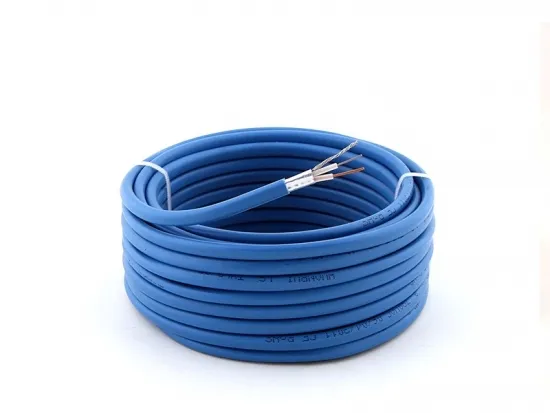
Preventing ice dam formation and maintaining unobstructed drainage across roof edges, valleys, and downspouts requires continuous thermal output during freeze-thaw cycles. Implementing a high-efficiency gutter heating cable system allows commercial facilities and residential roof architectures to mitigate severe winter structural risks while maintaining strict energy management profiles. Evaluating the energy-saving performance of a high-efficiency gutter heating cable requires analyzing conductive matrix efficiency, outer sheath thermal transfer rates, automated moisture-temperature sensing integration, and proper circuit design. This technical guide examines the thermal efficiency mechanisms, power optimization controls, and testing standards that drive measurable energy savings in modern roof and gutter de-icing operations.
Core Thermal Principles Driving Energy Efficiency
The primary mechanism governing the performance of a high-efficiency gutter heating cable is its ability to match power consumption directly to ambient moisture and cold temperature demands without wasting electrical energy during idle thermal conditions.
Traditional freeze protection layouts often run continuous power regardless of ambient moisture levels, leading to high electrical expenditure. A high-efficiency gutter heating cable relies on optimized physical construction, including high-purity copper bus wires, advanced cross-linked conductive core matrix structures, and UV-stabilized polyolefin or fluoropolymer jackets that maximize surface heat dissipation directly into surrounding ice and meltwater.
| Operational Parameter | Standard Gutter Trace Line | High-Efficiency Gutter Heating Cable |
| Nominal Power Output in Ice/Water | 30 W/m to 40 W/m | 30 W/m to 40 W/m (Instant Heat Transfer) |
| Air Output Heat Transfer Loss | Higher thermal loss into dry air | Optimized directional jacket emission |
| Bus Wire Resistance Stability | Moderate drift over operational cycles | High-purity nickel-plated copper (< 0.5% drift) |
| Sensory Control Compatibility | Basic ambient thermostat compatible | Multi-stage ambient + moisture controller ready |
| Jacket Thermal Conductivity | Standard polyolefin | Thermally enhanced UV-resistant compound |
By enhancing the thermal coupling between the high-efficiency gutter heating cable core and the metal or PVC gutter surface, heat transfer occurs rapidly, melting ice channels faster and allowing control sensors to de-energize circuits sooner.
Advanced Control Integration for Operational Energy Reduction
Deploying a high-efficiency gutter heating cable alongside intelligent control electronics provides the largest single reduction in seasonal kilowatt-hour (kWh) consumption. Passive temperature-only control often leaves system power active whenever ambient temperatures drop below freezing, even when gutters are completely dry and free of snow accumulation.
Integrating ambient temperature and moisture sensors ensures the high-efficiency gutter heating cable energizes only when two conditions occur simultaneously: ambient air temperature drops below the set point (typically 3°C or 37°F) and standing water or snow presence is actively detected in the gutter channel.
-
Dual-Parameter Sensing: Eliminates dry-air running time, reducing total seasonal operating hours by up to 60% compared to simple temperature-only thermostats.
-
Hold-On Timer Programming: Ensures the high-efficiency gutter heating cable stays active just long enough to flush meltwater through downspouts after snowfall ceases, preventing downstream ice blockage while avoiding unnecessary extended runtimes.
-
Soft-Start Inrush Mitigation: Modern control panels manage cold-start current spikes effectively, maintaining steady voltage parameters for every installed high-efficiency gutter heating cable run and preventing power surges across industrial distribution panels.
Combining intelligent sensing with a high-efficiency gutter heating cable creates an automated demand-response thermal system that consumes electrical power strictly during active ice mitigation events.
Material Durability, UV Resilience, and Long-Term Efficiency Retention
Long-term energy-saving performance depends heavily on the cable's resistance to environmental degradation. Solar radiation, standing water exposure, and thermal cycling can degrade inferior jacketing materials, leading to moisture ingress, matrix breakdown, and diminished thermal output efficiency over time.
A high-efficiency gutter heating cable utilizes high-grade UV-stabilized outer jackets engineered to withstand continuous exposure to intense ultraviolet radiation without micro-cracking.
-
Hydrophobic Outer Layer: Prevents water retention around the jacket outer wall, ensuring heat produced by the high-efficiency gutter heating cable directly targets ice in the gutter rather than boiling trapped surface water film.
-
Cross-Linked Molecular Structure: Stabilizes the internal conductive polymer or resistance element structure against thermal fatigue, preserving baseline electrical performance across years of freeze-thaw cycles.
-
Tinned Copper Braid Protection: Provides mechanical reinforcement against sharp gutter edges, ice drag forces, and debris accumulation, maintaining complete electrical grounding safety while aiding lateral heat dispersion along the entire trace length.
Maintaining structural and material integrity over time ensures that a high-efficiency gutter heating cable retains its original baseline efficiency ratings year after year without progressive performance loss.
Circuit Design, Sizing, and Quality Verification Standards
Achieving optimal energy savings requires precise circuit design, correct cable length calculations, and rigorous quality testing prior to seasonal operation. Oversized or poorly routed circuits lead to uneven heat distribution and localized thermal waste.
To maximize performance when specifying a high-efficiency gutter heating cable:
-
Accurate Length Sizing: Calculate exact gutter lengths, downspout drop runs, and roof valley loops. Avoid unnecessary overlapping or excessive looping to maintain uniform linear power distribution across the entire high-efficiency gutter heating cable installation.
-
Dedicated Voltage Circuitry: Ensure supply voltages match cable specifications (120V or 208-277V). Proper supply voltage ensures the high-efficiency gutter heating cable operates precisely at its rated watt-per-meter output curve without voltage-drop efficiency losses.
-
Pre-Season Insulation Resistance Testing: Perform megohmmeter (Hi-Pot) testing at 500V DC or 1000V DC before winter operations. A minimum reading of 20 MΩ confirms that the high-efficiency gutter heating cable insulation remains dry and free of mechanical damage.
-
Visual Gutter Cleanout: Clear leaves, silt, and debris prior to energizing circuits. Organic buildup acts as an insulator that prevents the high-efficiency gutter heating cable from contacting meltwater, artificially prolonging heating cycles.
Applying proper installation standards, intelligent control automation, and robust quality control protocols guarantees that a high-efficiency gutter heating cable delivers reliable freeze protection, prolongs roof infrastructure lifespans, and minimizes seasonal power costs.