 EN
EN

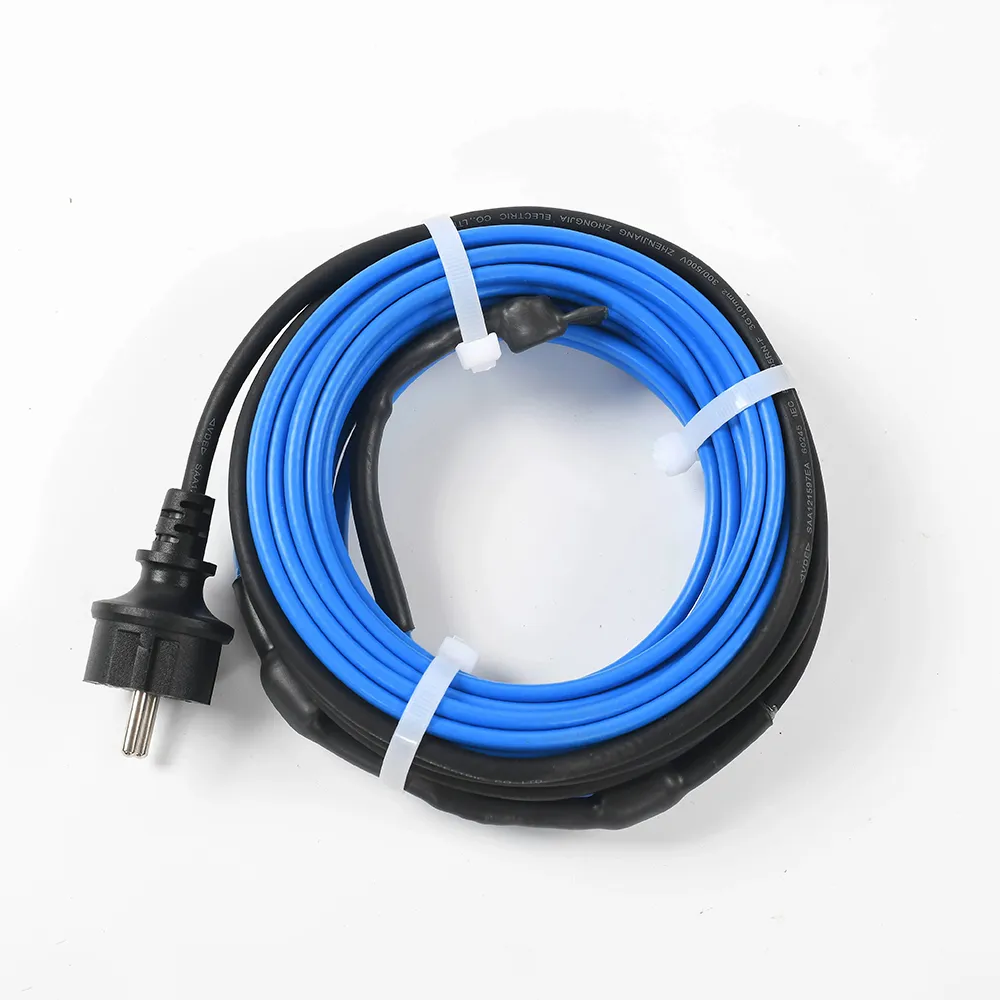
In cold climate zones, industrial and commercial facilities face a persistent hazard that can trigger full operational shutdowns within hours: frozen piping systems. When ambient temperatures drop below freezing, uninsulated water pipelines, process piping and fire suppression piping are prone to ice blockage. The impacts go far beyond minor disruptions. A single frozen pipe may trigger cascading failures, ranging from pipe rupture and site flooding to complete production halt. Electric heat tracing-based pipe freeze protection has become a mature, reliable solution to mitigate cold-weather downtime risks. Facility managers and mechanical engineers operating in frigid regions need a clear understanding of how this technology safeguards continuous operation.
How Frozen Pipes Lead to Unplanned Downtime
Several correlated physical mechanisms cause outages once pipes freeze. Water expands by roughly 9% upon turning to ice; in fully sealed, liquid-filled pipes, this expansion generates extreme internal pressure, potentially exceeding 2,000 psi under worst-case closed-loop conditions. Such pressure can crack carbon steel, stainless steel, copper and reinforced PVC piping.
Beyond physical pipe damage, solidified media inside process lines renders bulk chemicals, polymers and petroleum feedstocks unusable, resulting in scrapped production batches. Frozen sprinkler piping also creates critical life-safety hazards, which may force facility evacuation until full repairs are completed.
The financial losses associated with freeze damage are substantial. Research published by the Insurance Institute for Business and Home Safety shows that commercial facilities suffer average losses of $10,000–$50,000 per freeze-related incident. Industrial plants with interrupted production lines often incur losses reaching hundreds of thousands of dollars. In regions with multi-month subzero winters, including northern Canada, Scandinavia, Siberia and the northern United States, pipe freezing is not an occasional seasonal issue but an ever-present operational risk.
Working Principle of Electric Pipe Freeze Protection
Electric heat tracing systems maintain pipeline surface temperatures above the freezing point of internal media to avoid ice formation, even under ambient temperatures as low as -40°C. The system delivers targeted heat along pipe surfaces via two mainstream heating cable types — self-regulating heating cables and constant-wattage heating cables — to offset passive heat loss from cold piping.
Self-regulating heating cable technology
Self-regulating heating cables feature a conductive polymer matrix core with variable resistance. When pipe surfaces cool toward freezing, the polymer matrix contracts, bringing embedded conductive carbon particles into closer contact, lowering overall resistance and automatically boosting heat output at cold sections. As temperatures rise, the polymer expands, separating carbon particles to raise resistance and cut power draw. This segmented self-adjustment avoids overheating and reduces unnecessary energy consumption during milder spells.
Unlike fixed-output constant-wattage cables, qualified self-regulating heating cables allow limited overlapping installation at valves, flanges and elbows without thermal runaway risks, making them suitable for complex, multi-component piping networks. It should be noted that overlapping length and maximum ambient temperature limits must be followed per manufacturer installation specifications.
Constant-wattage heating cable technology
Constant-wattage cables deliver stable, uniform heat output for long-distance pipelines or processes requiring sustained high holding temperatures. When paired with dedicated thermostats and overheat protection switches, constant-wattage systems eliminate overheating risks and deliver stable temperature maintenance for high-demand industrial media transport lines.
Core Industrial & Infrastructure Applications in Cold Climates
Pipe freeze protection delivers the highest ROI for assets where unplanned shutdowns incur severe financial or safety consequences.
Oil & offshore energy
Crude oil, condensate and refined product pipelines require stable temperature control to avoid flow blockages. Wax appearance temperature (WAT) and hydrate formation thresholds vary widely based on crude composition and operating pressure; wax and hydrate deposits will form if pipeline temperature falls below the fluid-specific critical value, blocking full flow. Offshore platforms operating in cold coastal waters rely on certified explosion-proof heat tracing to maintain steady production and avoid emergency shutdowns. Explosion-proof self-regulating and mineral-insulated heating cables with ATEX and IECEx certification are specified for hazardous offshore environments.
Chemical processing
Temperature consistency is critical for chemical synthesis and polyurethane manufacturing. Many intermediate raw materials crystallize under low temperatures, which can stall entire reactor production trains and require days of thermal recovery and restart work. Short, complex process branches can use self-regulating heating cables, while long-distance high-temperature transport pipelines typically adopt constant-wattage heat tracing to stabilize fluid conditions.
Rail transit infrastructure
High-speed rail brake air pipelines and domestic water supply piping face sustained -30°C winter temperatures in northern cold regions. Customized heat tracing solutions prevent pipe freezing and eliminate weather-induced train delays.
Mountain & highway tunnel fire safety
High-altitude tunnels experience subzero temperatures for more than six months annually, with high wind speeds accelerating pipeline heat loss. Fire protection water mains require full-length heat tracing matched with thick thermal insulation to sustain safe minimum holding temperatures year-round. Distributed multi-circuit control architecture is adopted for these life-safety pipelines, ensuring single-circuit faults cannot disable the entire freeze protection network.
Intelligent Control & Remote Monitoring for Reliable Operation
Modern heat tracing systems adopt modular intelligent control to further reduce downtime risks. Pipe surface temperature sensors paired with electronic thermostats activate heating circuits only when temperatures approach the preset critical threshold (typically set at 4°C for standard water piping), cutting idle power consumption during mild weather while delivering fast response during sudden cold snaps.
Standard advanced systems support remote real-time monitoring and circuit fault alerting via cloud platforms, enabling maintenance teams to conduct proactive inspections before freezing events occur. Weather forecast linkage functions are available as a customized add-on module for large-scale integrated infrastructure projects.
For fire water pipelines in high-altitude mountain tunnels, segmented self-regulating heating cable layouts with independent control circuits are widely deployed, paired with matched thermal insulation layers to stabilize pipeline holding temperature at 5°C under extreme low-temperature, high-wind conditions. Independent circuit protection provides essential redundancy for life-critical fire suppression systems.
Long-Term Operational & Economic Benefits of Heat Tracing
Investment in properly engineered pipe freeze protection generates multi-layer long-term value beyond preventing one-time repair costs. Facilities avoid compounded losses stemming from halted production, emergency overtime labor, expedited material procurement and potential regulatory non-compliance penalties. Cyclical thermal stress from repeated freezing and thawing is eliminated, slowing pipe material fatigue and corrosion to extend pipeline service life.
Self-regulating heating cables deliver clear energy-saving advantages for year-round cold-region operation. Their segmented automatic temperature adjustment reduces power consumption versus non-stop constant-wattage systems; actual energy savings vary based on local climate, insulation thickness and operating hours. Under long-term subzero operating conditions, accumulated electricity savings can offset initial system installation costs within 3–5 years.
Heating cable manufacturers with complete global certification labs conduct full performance testing to meet international standards including UL, ATEX, CE, CSA and IECEx, ensuring consistent product quality for global industrial projects.
Conclusion
Pipe freeze protection is not an auxiliary add-on but a foundational system guaranteeing continuous operation for all cold-climate facilities. Specified electric heat tracing solutions maintain pipeline temperatures above fluid-specific freezing thresholds, eliminating costly downtime caused by pipe rupture, solidified process media and disabled fire suppression systems.
For industrial plants, commercial buildings and public infrastructure operators in frigid zones, professionally designed heat tracing delivers measurable long-term gains: avoided unplanned outages, extended asset service life and reduced energy expenditure. With increasingly volatile global weather patterns, pipe freeze protection has become an essential investment for any facility operating under persistent subzero temperature conditions.
Table of Contents
- How Frozen Pipes Lead to Unplanned Downtime
- Working Principle of Electric Pipe Freeze Protection
- Self-regulating heating cable technology
- Constant-wattage heating cable technology
- Core Industrial & Infrastructure Applications in Cold Climates
- Oil & offshore energy
- Chemical processing
- Rail transit infrastructure
- Mountain & highway tunnel fire safety
- Intelligent Control & Remote Monitoring for Reliable Operation
- Long-Term Operational & Economic Benefits of Heat Tracing
- Conclusion