 EN
EN

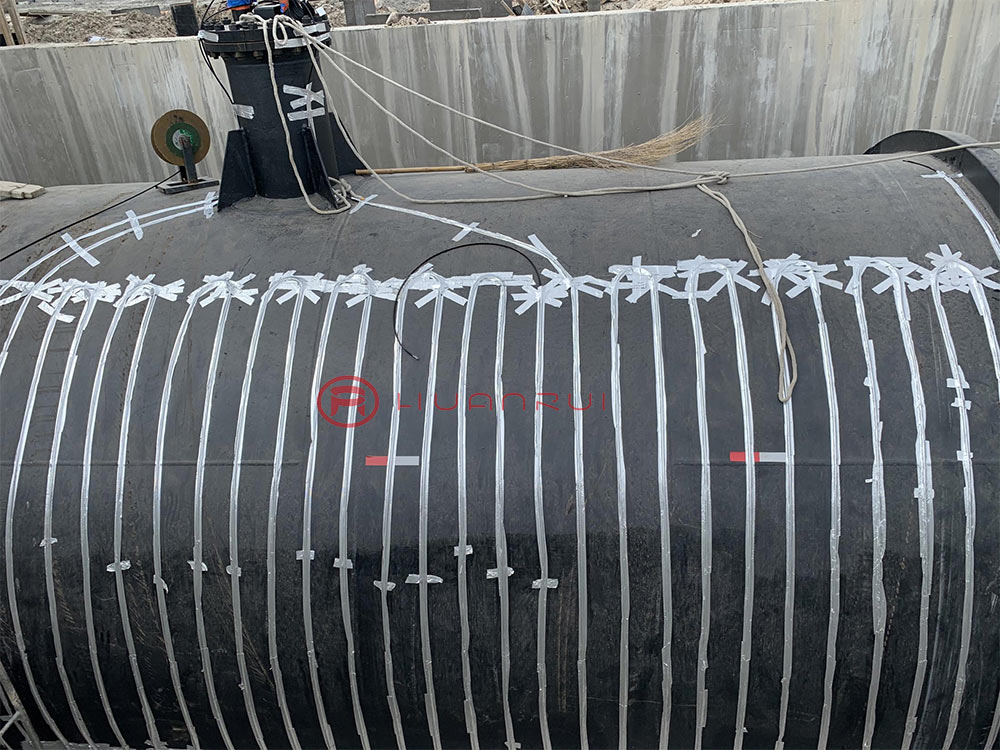
When vertical storage tanks store media, low‑temperature in winter may cause cooling, solidification or crystallization of stored medium, leading to abnormal taking‑out and transportation of medium. The electric heat tracing thermal insulation system can maintain the process temperature of medium inside tanks and ensure safe and stable tank operation. Storage tanks feature large vertical wall area. It is difficult to lay and hang heat tracing cables on vertical tank walls. Reliable fixing process shall be adopted to prevent cables from dropping, shifting or detaching under gravity, so as to guarantee effective heat transfer.
There are two common laying forms for electric heat tracing cables on tank walls: horizontal back‑and‑forth meander laying, and bottom‑up spiral winding laying. Correspondingly, there are two mainstream fixing methods: heat‑resistant pressure‑sensitive adhesive tape fixing, and stainless steel band with clip mechanical fixing, suitable for different working conditions respectively.
1. Fixing with heat‑resistant pressure‑sensitive adhesive tape
Heat‑resistant pressure‑sensitive adhesive tape is mostly used for lightweight self‑regulating heating cables. Before construction, clean tank wall surface, remove oil stain, rust and burrs and keep tank wall dry and flat. Lay out heat tracing cables closely against tank wall according to spacing calculated from heat loss data. Use heat‑resistant pressure‑sensitive adhesive tape for positioning fixing with spacing of 300‑500 mm. After full laying, aluminum foil tape can be fully pasted externally to enlarge heat‑contact area and improve heat transfer efficiency.
Note: adhesive tape is not suitable for working conditions with heavy vibration, open‑air exposure or long‑term high‑temperature service. The tape may age and peel off, resulting in displacement and falling‑off of heating cables.
2. Mechanical fixing with stainless steel bands and matching clips
For large‑size storage tanks, vibrating conditions and harsh open‑air environments, mechanical fixing with stainless steel bands and special clips is preferred. Fasten stainless steel bands horizontally around tank side wall from bottom to top according to designed laying spacing. Lay heat tracing cables flat against tank wall, adjust route and gap, then lock cables onto steel bands by matching clips.
Mechanical fixing by steel bands features good anti‑aging and anti‑sagging performance, suitable for vertical wall construction of large vertical storage tanks. Clip fastening force shall be moderate. Do not squeeze cable outer sheath excessively to avoid damage to insulation layer.
3. Key supporting notes for heat tracing installation on tank wall
(1) Polish sharp edges and corners of tank wall before laying construction to prevent scratching cable sheath. Bending radius of heating cables shall comply with product specification. Sharp folding is forbidden.
(2) Partial limited overlap is allowed for self‑regulating heating cables. Cross‑over or overlapping laying is strictly forbidden for constant‑wattage heating cables to avoid local overheating and premature aging.
(3) Focus heat tracing on middle‑lower part of vertical storage tanks. It is unnecessary to cover full tank height. Keep cables away from manholes, nozzles and reinforcing ribs on tank wall, so as to avoid cable damage during later equipment maintenance.
(4) Insulation resistance test shall be completed after full laying and fixing. Thermal insulation layer and outer protective jacket can only be installed after passing test. Do not knock or squeeze fixed heating cables during thermal insulation construction.
(5) For storage tanks in explosive hazardous areas, junction boxes and end caps shall be explosion‑proof certified. Braided shielding layer shall be reliably earthed.
Conclusion
Fixing of electric heat tracing cables on storage tank wall is more than simple binding. Fixing solution shall be selected comprehensively according to cable type, tank dimension, on‑site vibration, ambient temperature and explosion‑proof class. Only when cables keep close contact with tank wall without loosening or shifting can good heat‑tracing performance be achieved, and local freezing blockage and medium temperature drop be avoided.