 EN
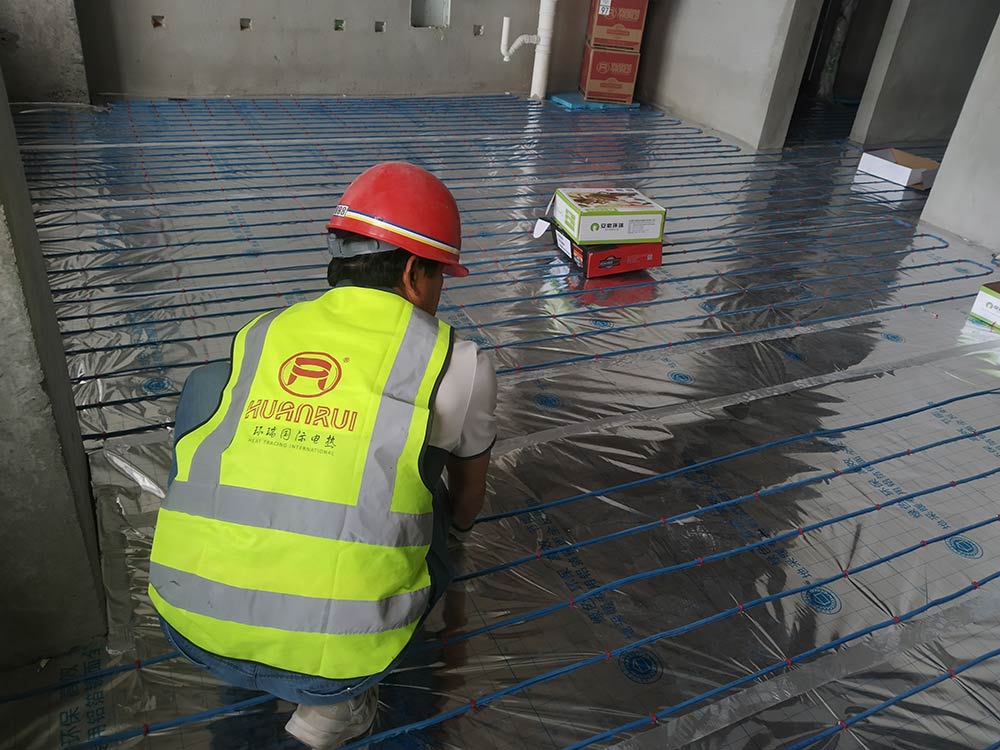
Many buyers notice a huge price gap when comparing heating cables or self-regulating heat tracing cables from different suppliers. Products that look nearly identical can differ greatly in unit price. The price difference is not just brand markup. It comes from raw materials, formulation, manufacturing process, performance parameters, certifications, quality control and after-sales support. Choosing only the cheapest per-meter option often leads to fast power degradation, safety hazards, short service life and failed site acceptance, which raises your total cost of ownership.
Raw material cost, PTC formulation is the basis of price difference
The PTC polymer core is the heart of self-regulating heating cables. Low-cost versions usually use recycled or low-purity raw materials with poor dispersion of conductive particles. They work at first but lose heating power rapidly after thermal cycles and carry overheating risks. High-grade cables use virgin modified polymer compounds with stable PTC characteristics and controlled performance decay. Insulation and outer jacket materials include ordinary polyolefin, flame-retardant polyolefin, LSZH and fluoropolymer. Their temperature resistance, ageing resistance, chemical resistance and flame performance vary, together with cost. Copper conductor purity, cross-section, tin plating, braid coverage and metal sheath material for MI cables also change the final price. Magnesium oxide purity and seamless metal sheath selection are key price differentiators for MI mineral-insulated heating cables.
Product specifications, heating cable type sets the baseline price
Self-regulating, constant-wattage, MI mineral-insulated and carbon-fiber heating cables follow different technical routes with different baseline costs. Within self-regulating lines, there are different maintenance temperature ratings, power outputs, voltage classes, explosion-proof versions, shielded and non-shielded types. Special grades for corrosion resistance, oil resistance, UV outdoor exposure and roof de-icing require upgraded construction and carry higher prices. Many low-price suppliers compare basic general-purpose cables against high-end explosion-proof grades without clarifying specs.
Manufacturing process and quality control bring hidden costs
Low-cost factories skip many test procedures with simple power checks only. Professional manufacturers use precision extrusion lines and run batch tests for power stability, dielectric strength, water immersion insulation and thermal cycling. Strict rejection rules for defective products guarantee consistent heat output along the cable and avoid hot spots. Simplified production often causes uneven heat and higher failure risk when cables overlap during installation.
Export certifications, compliance qualifications increase costs
For projects in Russia, EU, North America and other overseas regions, valid EAC, ATEX, CE, UL certificates are required. Certification testing, annual audits and system maintenance bring continuous expense. A certificate proves the product is designed according to regional safety standards for explosion protection, flame retardancy and EMC. Many small factories only carry out basic inspection without genuine export certificates, or use borrowed certificates. Their cables cannot be used in overseas projects, chemical plants or hazardous areas and may be rejected at customs or site inspection. ISO systems, internal factory audits and third-party annual audits also add compliance costs.
Warranty and supporting services affect quotations
Low-price offers usually come with short warranty and zero engineering support. Reliable manufacturers include thermal calculation, selection support, installation guidance and long-term warranty. Compensation channels are available for qualified quality issues. Order quantity, lead time and custom requirements also affect unit price: small-batch orders, custom cut lengths, pre-terminated ends and complete kits with connection boxes or thermostats cost more than bulk standard stock.
Brand and distribution channels further widen price gaps
Well-known international brands invest heavily in R&D and database development. Reputable Chinese manufacturers balance quality and price, while small workshops cut corners on material, testing and R&D to chase low prices. Intermediate distributors also push up the final price compared with direct purchase from the factory.
Buyer tip: Never compare only the price per meter. Align the full specification list: cable type, wattage, temperature rating, jacket material, shield/explosion-proof requirement, applicable environment, certificates, warranty and test reports. Always evaluate total cost of ownership instead of one-time purchase cost. Stable, certified heating cables deliver reliable freeze protection, roof deicing and tank temperature maintenance for your project.
Table of Contents
- Raw material cost, PTC formulation is the basis of price difference
- Product specifications, heating cable type sets the baseline price
- Manufacturing process and quality control bring hidden costs
- Export certifications, compliance qualifications increase costs
- Warranty and supporting services affect quotations
- Brand and distribution channels further widen price gaps