 EN
EN
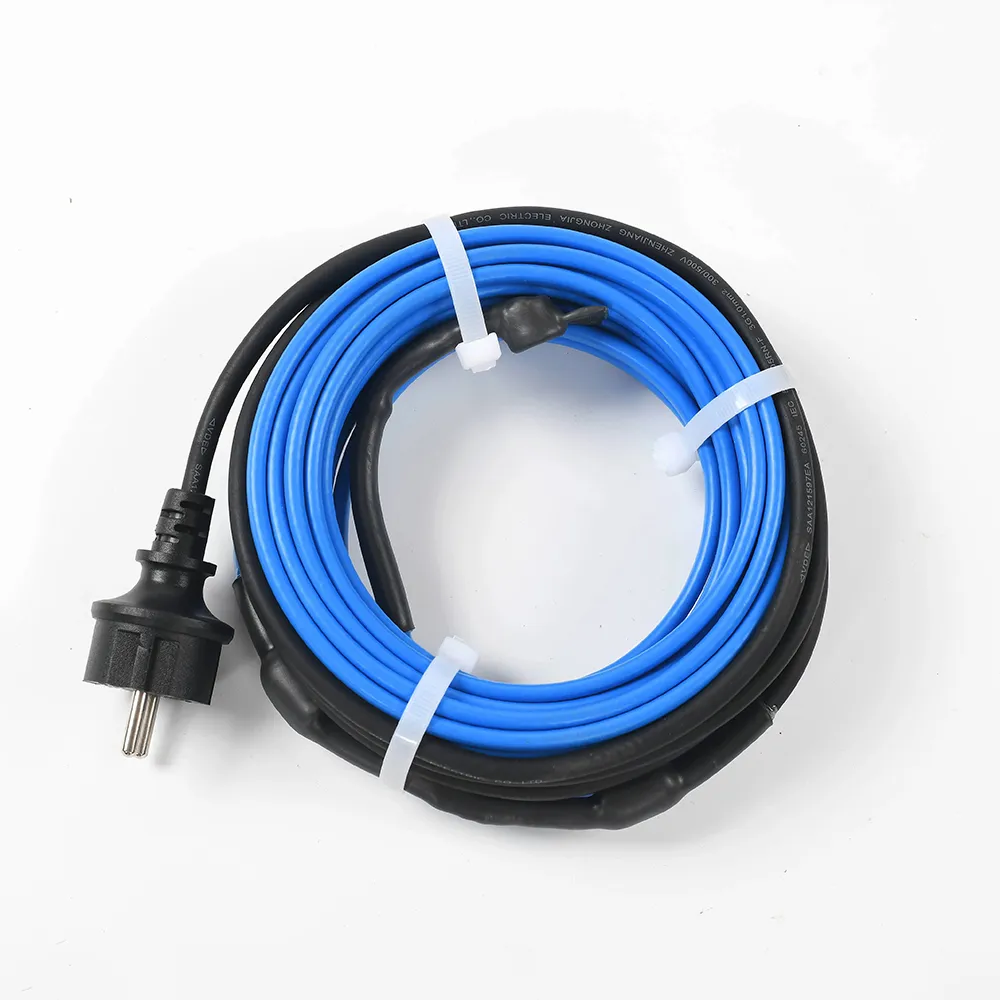
Well-designed pipe freeze protection serves as a fundamental guarantee for continuous production and intact infrastructure of industrial plants. For facilities engaged in complex fluid conveyance, chemical processing and power generation, emergency retrofitting after the first frost brings prominent financial and safety risks. Early-stage engineering planning centered on qualified heat tracing integrates thermal design into overall construction layout, turning heat tracing from emergency repair solution into reliable permanent protection.
Prevent Catastrophic Pipe Damage and Medium Solidification
Delayed planning greatly raises the risk of pipeline rupture. Frozen static liquid expands inside pipes and generates massive internal pressure, cracking heavy-duty carbon steel and stainless steel piping. Once specialty chemicals, polymers or high-viscosity oil solidify inside closed pipelines, most blocked lines require full replacement. When heat tracing is arranged in the design phase, engineers can equip vulnerable fittings including elbows, valves and dead legs with heating cables; for applicable working conditions, drainage or medium circulation can also work as alternative anti-freeze solutions. Such comprehensive planning avoids huge expenditure on emergency renovation and full pipeline replacement.
Secure Continuous Production and Cut Unexpected Shutdown Loss
Modern industrial plants run on precise production schedules. Freeze blockage of critical process lines leads to production suspension, revenue loss, contract breach and damaged business reputation. Early planning enables accurate heat-loss calculation based on historical minimum ambient temperature of the project site: self-regulating cables with safe overlapping property fit complex piping layout, parallel constant-wattage cables with steady power output suit long-distance pipelines, and MI mineral-insulated cables are specified for high-temperature hazardous service. All systems can be fully commissioned before winter to sustain stable output against abrupt temperature drop.
Optimize Long-Term Energy Efficiency via Intelligent Control
Advance planning allows designers to build energy-saving power distribution frameworks instead of makeshift power-consuming solutions. Equipped with ambient sensors and smart thermostats, heat tracing systems activate only when pipe temperature hits preset threshold and shut down automatically under mild weather to cut power bills and carbon emission. It is noteworthy that intelligent control can also be retrofitted to existing systems later for energy saving; post-installed tracing systems are not limited to manual switch operation.
Streamline Installation and Integrate with Overall Construction
Arranging freeze protection during new construction or renovation simplifies installation and controls cost effectively, as cables can be laid before thermal insulation and outer cladding installation. Retrofitting after project completion usually involves partial removal of existing insulation and scaffold disassembly with extra labor cost, while small-bore pipeline retrofits in mild climate can adopt external cable wrapping plus partial local insulation without large-scale demolition. Engineers can customize routing: spiral wrapping for heat reinforcement on valves and dead legs, straight installation for standard freeze protection, delivering neat layout for convenient future maintenance.
Rational Power Distribution Design against Inrush Current
Power configuration must be matched with electrical features of different heating cables: constant-wattage cables (especially series type) produce remarkable inrush current at cold startup, whereas self-regulating versions see moderate current rise even under ultra-low temperature. Electrical designers select properly sized distribution panels, circuit breakers and transformers during early planning to cope with startup current spike, prevent unexpected tripping and equipment damage, and coordinate tracing load with whole-plant power supply to avoid partial blackout.
Meet Global Safety Codes and Environmental Compliance Standards
Chemical and petrochemical industries are subject to strict safety and environmental regulations requiring controlled operating temperature for hazardous fluids. Pipe rupture and leakage caused by freezing may result in fines, litigation and expensive environmental remediation. Product certifications such as CNEX, ATEX and IECEx are obtained by cable manufacturers before delivery; early project design selects certified products matching hazardous area classification and reserves sufficient lead time for field explosion-proof inspection and acceptance, forming an essential part of enterprise risk control and environmental compliance management.
Table of Contents
- Prevent Catastrophic Pipe Damage and Medium Solidification
- Secure Continuous Production and Cut Unexpected Shutdown Loss
- Optimize Long-Term Energy Efficiency via Intelligent Control
- Streamline Installation and Integrate with Overall Construction
- Rational Power Distribution Design against Inrush Current
- Meet Global Safety Codes and Environmental Compliance Standards