 EN
EN
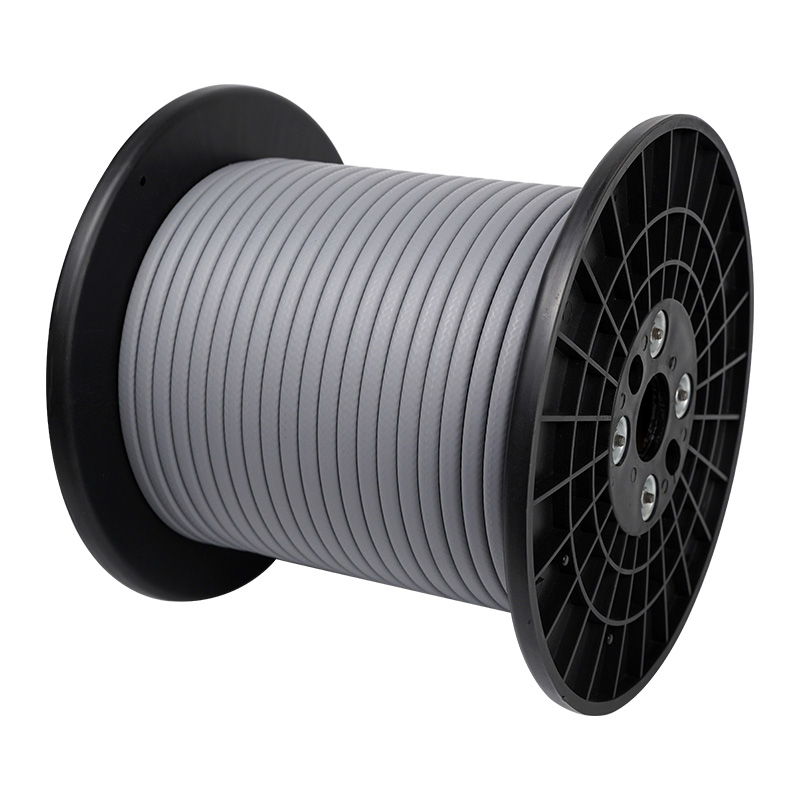
In the modern industrial landscape, operational efficiency is no longer just a competitive advantage—it is a necessity for sustainable growth. For facilities managing vast pipeline networks—such as the Shandong Yulong Petrochemical Megaproject—the energy required for heat tracing can be substantial. While traditional constant wattage systems provide reliable heat, self‑regulating heating cable technology offers a more sophisticated, energy‑conscious approach by automatically adjusting its output based on real‑world ambient conditions.
1. The Science of Intelligent Heat Output
The core efficiency of a self‑regulating heating cable lies in its specialized conductive polymer core. Unlike standard power cables or constant wattage designs, this material acts as a continuous series of sensitive thermostats.
- Automatic adjustment: When the ambient temperature drops, the polymer core contracts, creating more electrical paths and increasing heat output exactly where needed.
- Energy conservation: As the pipe temperature approaches the desired setpoint, the core expands, reducing electrical paths and significantly lowering power consumption.
- Localized response: Because this reaction happens independently at every point along the cable, a section exposed to cold wind receives high heat while another inside a heated building draws minimal power. This “heat‑on‑demand” behavior eliminates the waste inherent in fixed‑power systems.
2. Reducing Waste in Large‑Scale Infrastructure
In mega‑projects, even a small percentage reduction in energy waste translates to massive cost savings. Consider the Baotou Hongyuan Energy High‑Purity Crystalline Silicon Project, which utilizes over 83,838 meters of heating cable across 1,285 circuits, with 16 different maintenance temperature setpoints ranging from 3°C to 200°C.
- Eliminating overheating: Traditional constant wattage systems often continue outputting full power even when not required. Self‑regulating technology ensures energy is consumed only to counteract actual heat loss.
- Circuit optimization: Each of the 1,285 circuits draws only the power necessary for its specific process requirements—from freeze protection at 3°C to high‑precision process maintenance at 200°C.
- Safety meets efficiency: These cables are designed to never overheat or burn out, even when overlapped. This reduces the need for high‑energy safety margins often required by other heating methods.
3. Case Study: Energy Efficiency in High‑Altitude Tunnels
Energy management is critical in remote locations where power supply may be limited. For the G3011 Altun Mountains Tunnel in Gansu—known as the province’s “highest plateau tunnel”—Anhui Huanrui implemented 33,000 meters of DBR series self‑regulating heating cables across 336 circuits.
- Precision freeze protection: By maintaining a steady 5°C for fire safety pipelines in extreme high‑altitude cold, the system avoids the “all‑or‑nothing” power draw of non‑regulating systems.
- Operational reliability: The same technology has been proven in other high‑altitude passages, such as the Qinghai‑Gonghe to Yushu Highway’s Yankoushan Tunnel, where 11,000 meters of self‑regulating cables perform reliably in oxygen‑thin, frigid environments—ensuring that no energy is wasted on system repairs or inefficient heat distribution caused by cable degradation.
4. Verified Performance and Global Standards
The energy‑saving capabilities of modern self‑regulating heating cables are backed by rigorous verification. Anhui Huanrui’s CNAS‑accredited testing center conducts over 100 types of tests to ensure thermal conversion efficiency meets internationally recognized standards. This accreditation—a hallmark of authoritative laboratories—means every meter of heating cable performs exactly as engineered.
Furthermore, holding global certifications such as UL (US), ATEX (EU), CE, TUV (Germany), CSA (Canada), and EAC (Eurasian Customs Union) ensures that energy‑efficient designs meet the most stringent safety and performance standards required by industry giants like Sinopec, CNOOC, and CNPC. As CNOOC noted in their own publications, adopting advanced heat tracing solutions helped “reduce costs and increase efficiency” while ensuring operational reliability in harsh environments like the Bohai Sea.

5. Beyond Energy Savings: Lower Lifecycle Costs
Energy consumption is measured in kilowatt‑hours, but true efficiency also accounts for installation complexity, maintenance frequency, and system longevity.
- No overheating, no burnout: Because self‑regulating cables inherently limit their own temperature, they can be overlapped during installation without risk of hot spots—simplifying layout and reducing labor time.
- Lower maintenance, longer life: Constant wattage cables run at full power even when not needed, accelerating insulation aging. Self‑regulating cables run cooler most of the time, extending cable life and reducing replacement frequency.
- Supporting sustainability goals: Lower energy consumption directly reduces Scope 2 emissions (from purchased electricity), helping industrial operators meet corporate carbon reduction targets.
Conclusion
By transitioning to self‑regulating heating cable technology, industrial operators can achieve a “warm world” through smarter engineering—reducing their carbon footprint and operational costs without compromising on safety or reliability. The evidence is already in the field: from the massive pipe galleries of the Yulong petrochemical complex (over 43,922 meters of self‑regulating cables) to the oxygen‑thin altitudes of the Altun Mountains tunnel. In each case, self‑regulating cables have proven that energy efficiency and industrial reliability are not trade‑offs but partners.
For plant engineers, project managers, and sustainability officers alike, the question is no longer whether to specify self‑regulating heating cables, but how quickly they can be integrated into existing and future designs. In a world where every watt counts, heating on demand is the new standard.