
Home > News > Company News
Due to its special geographical environment and climate conditions, the low temperature in winter often leads to the freezing and rupture of fire protection pipelines in northern high-speed tunnels, seriously affecting the emergency response capability of the fire protection system.Electric heat tracing technology, with its precise temperature control, energy saving, and strong adaptability, has become a solution to ensure the safe operation of tunnel fire protection pipelines.
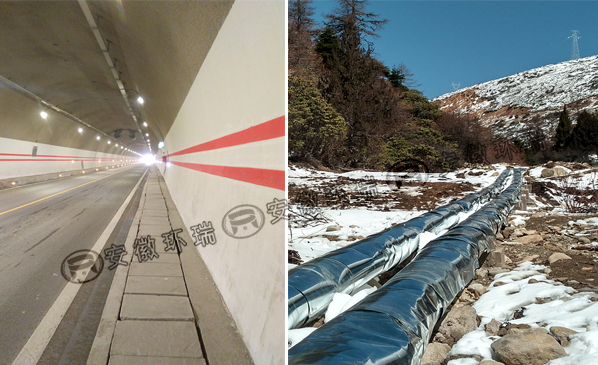
Why is electric heat tracing insulation used for fire protection pipelines in northern high-speed tunnels?
Extreme low temperature leads to high risk of pipeline freezing
In winter in the north, the temperature is often below -20℃, and even below -30℃. The still water in the fire pipeline is prone to freezing and expansion, causing pipeline cracking or valve jamming.Once frozen, the fire protection system will be unable to supply water in emergency situations, posing a threat to tunnel safety.
The tunnel environment is complex, and traditional insulation methods are limited
The humidity inside the tunnel is high and the ventilation is poor, making traditional insulation materials prone to moisture and failure.The electric heat tracing system, through active heating, can adapt to high humidity environments and avoid secondary freezing caused by the accumulation of condensed water.
The dual pressure of maintenance costs and safety hazards
Tunnel fire protection pipelines are often concealed and need to be dismantled and repaired after freezing, which is time-consuming and labor-intensive.The electric heat tracing system prevents freezing damage from the source, reduces maintenance operations, and avoids the risk of leakage caused by pipeline rupture.
How does the electric heat tracing system achieve insulation of tunnel fire protection pipelines?
Scientific selection and design
Matching pipeline parameters: Calculate heat loss based on pipe diameter, length, and ambient temperature, and choose self-regulating heat tracing or constant wattage electric heating.
Explosion proof and corrosion-resistant design: Due to the frequent sandstorms and humid tunnel environment in the north, stainless steel armor or fluoroplastic sheath with heat tracing tape should be selected.
Laying method: single straight laying or spiral winding
Multi layer protective structure: The outer layer of the heat tracing cable is wrapped with rock wool insulation layer and galvanized iron sheet protective shell, reducing heat loss and resisting wind and sand erosion.
Intelligent Control and Security Assurance
Temperature control system:
Basic control: Set the start stop threshold for the mechanical thermostat.
High precision control: The controller+sensor precisely controls the temperature to meet the real-time response requirements of the fire protection system.
Safety protection: Install grounding protection and leakage circuit breakers.
Explosion proof junction box sealed with epoxy resin, suitable for humid environments.
Remote monitoring: connected to the tunnel DCS system, real-time monitoring of temperature, current, and insulation status, automatic alarm for abnormalities, and location of fault points.
Electric heat tracing technology, with its intelligence and stability, has built a good protective barrier for the fire protection pipelines in northern high-speed tunnels, solving the problem of freezing damage in extremely cold environments.

Anhui Huanrui Heating Manufacturing Co.,Ltd provides self-regulating and constant wattage heating cables for industrial and residential applications. Our certified solutions offer reliable freeze protection and temperature maintenance. Trusted by global clients. Contact us today.
Jingsan Road, Feidong Economic Development Zone, Hefei
Copyright © 2025 by Anhui Huanrui Heating Manufacturing Co.,Ltd Privacy Policy
 EN
EN